

It is Olympic fever at our house, much like everywhere else I suspect. Even though I am not a sporty person, there is something compelling to be able to watch the best in the world and it doesn’t matter which sport, I am happy to sit and see athletes on top of their games: swimming, rugby, basketball, diving even horse riding…we’ve been glued to the TV screen in the past week!
Of course, the fact that the games are held in Rio makes it especially interesting for us, bringing back memories of our trip there so long ago. We had a fantastic time, though my kids were too young to remember, and I can honestly say Rio de Janeiro was one of my favourite cities.
Wondering why? Let me share the post I wrote after our visit in 2008.
Rio de Janeiro, Brasil
January 4-10, 2008
What best way to start 2008 than spending a week in Rio. This had been a long dream of mine since I was 10 years old, and now that we were so close ( well, sort of) I could not resist pack and drag the family in a midnight flight down south!
We decided to stay by the ocean in Copacabana for 5 nights, and while the hotel was a little dated, the staff was very friendly and the location was superb: to open your shutters to a full view of Copacabana beach was priceless!!! Brazilians call Rio de Janeiro a cidade maravilhosa (the marvelous city), and for good reasons: the setting is stunning, flanked by the large bay of Guanabara to the east, and the Atlantic ocean to the south, white sandy beaches and granite peaks. Terry ranks it as the most beautifully situated city in the world, after Sydney of course!

Copacabana beach from our hotel window
There was talk (mostly from me) of visiting the Centro (downtown Rio) and walk thru the historical quarters, take a look at a samba school, even doing a favela tour (they are the hillside shantytowns or slums, where hundreds of thousands of people live in precarious circumstances) but democracy ruled (a rare event Marc says) and I was outvoted 3 to 1, in favor of spending time at the beach! While I managed to sneak in a tour bus to the Corcovado Mountain (at the top of which Christ the Redeemer gazes over Rio), we spent most of our time taking in Rio life, as the cariocas (Rio dwellers) do. And it turned out to be a lot of fun. We caught up with the kids new friend, Taina (the Amazon from NYE), who, with her mother Maria, drove us to Sugarloaf Mountain and around town, giving us an insight of cariocas daily life. When not working, the people seem to spend their time shopping, eating, drinking, and going to the beach with boundless energy, pretty much like Australians! Add to the picture, the sounds of bossa nova and samba music flowing out of open-air bars and restaurants, and we were very happy to fit in, exploring Rio’s 3 world famous beaches of Copacabana, Ipanema and Leblon.

Cable car ride up Sugarloaf mountain

Overlooking Botafogo Bay


We took our first walk along Ipanema and Leblon beach on a Sunday, not a good day for shopping but great for people watching, as the 6-lane road running along the beach was closed to vehicle traffic. While Marc and Anne spent hours in the surf, Terry and I sat at one of the dozens of refreshment shacks, sipping agua de coco for me, Skol beer for Terry, watching the constant traffic of joggers, cyclists, walkers. I marveled at the variety of the people (black, brown, blue eyed blonde, red hair), and Terry kept a sharp look out for the beautiful bodies in the briefest bikinis he’d heard Ipanema was famous for! Let me tell you, that there are a lot of bodies in brief bikinis out here, but they’re not all beautiful. It doesn’t matter though if you’re not gorgeous, most cariocas seem uninhibited, and go by the motto “if you’ve got it, flaunt it”. For the ones who haven’t got it, some stop at the plastic surgeon first, and the ones who can’t afford “reshaping” display their front and rear bumpers in a “who cares anyway” attitude. It provided us with endless entertainment, along with the impromptu street parties and beach football and volleyball.

Young cariocas on the beach

Looking down Leblon and Ipanema beach
We loved the beach scene so much that we ended up spending the rest of the week there. Terry and I took it in turns going on beach walks, as the kids didn’t want to leave their favorite spot opposite the hotel. Where else could you walk around in your bikini, passing fellow walkers, fishermen, streets hustlers, 5 star hotels, 1960’s high rise apartments, designer jewellery shops? And how strange to reach exclusive Leblon, with its fancy restaurants, yet a favela on its hillside. The poor have a million dollar view down the beach!

Not our hotel, unfortunately

One of the many favelas
Back to Copacabana, unlike the upmarket suburb of Ipanema, it is more densely populated, traditional and lively. Since Terry and the kids were not interested in walking around the neighborhood, I’d leave them at the beach, browse thru the numerous music shops, bikini boutiques, and markets, and then meet them later at the local beach bar (which happened to be a favorite with the local girls too!) Now you would ask how one can stay all day at a city beach. The water itself is not very clean, in fact it is dirty with plastic bags and other rubbish, however as the waters inside the bay are even more polluted with sewerage, most people are happy to swim on the ocean surf. Our first reaction was “thank goodness for our tetanus and hepatitis shots!”. The main attraction though is the fact that you can rent a deck chair and umbrella for 7 reals a day (less than 3 euros), watch the world go by and the kids play safely, while dozens of vendors ply the beach offering icy cold beer for 2 reals (80 cents), camaroes (bbq prawns), fruit salads, ice creams, hats, sarongs, …you name it, you don’t even have to get up and worry about rubbish, someone comes along and takes it off you! If only we had that service on Australian (or French) beaches. No wonder no one wanted to leave the beach.

Beach vendors on a break

Life is better at the beach, they say
Even the gastronomic outings came out as second best, yet we ate like kings. From a simple “kilo place (you fill your plate from a buffet, then pay by the kilo), to a neighborhood churrascaria, a Thai restaurant in Leblon, and the extravagant Marius Meat and Seafood Buffet (where we all proclaimed to have the best meat in the whole of Brasil), we sampled more food than we could imagine (let alone eat)!

Chill and spices at the Copa market

Fresh Chicken anyone?

Picanha at one of the Churrascaria

Salad bar at Marius meat and Seafood buffet
Picanha and Farofa
This is typical Brasilian Churrasco (BBQ) fare. Picanha is a very popular beef cut in Brasil, here referred to as rump cap. Where I live in Sydney, we are very lucky to have a butcher nearby who prepares these rump cap skewers in a spicy marinade, all ready to grill. Then, a 5 mn drive away, there is my favourite green grocer in Miranda who sells a whole range of brasilian foodstuff like black beans, guava paste, and farofa. The latter is coarse manioc flour, which resembles dry breadcrumbs and has the texture of sand. Sounds appealing doesn’t it? Actually it tastes better than it sounds, and the dish is served in every churrasco as a side to grilled meat or rice and beans. The secret is to use lots of fat (butter or bacon or both!), herbs and spices to flavour and moisten this otherwise tasteless and dry flour, it then turns into a delicious accompaniment. I like to cook mine with eggs and spring onions, but any vegetables and herbs is fine too!

Serves 4 as a side
Ingredients
50g unsalted butter
275g manioc flour
2 tbsp virgin olive oil
4 spring onions, sliced
5 eggs
Salt and pepper
- Melt the butter in a saucepan over low heat. Add the manioc flour and toast it to a golden colour, stirring often for about 10 minutes. make sure it doesn’t burn. Set aside.
- In a non stick fry pan, heat the olive oil and cook the spring onions until just soft.
- Whisk the eggs in a small bowl and pour into the spring onions, scrambling them slightly and keeping them a little moist. Add the manioc flour and stir until well combined. Season to taste.
- Serve with sautéed spinach (or collard greens, as the brasilians do) and grilled steak.


Two recent events have caused me to feel quite nostalgic lately and longing for our past cruising life.
First, was us attending the Sydney Boat Show last weekend. While we are not currently in the market for a new sailing boat since selling our beloved VOAHANGY ( and Terry is plenty busy with our new charter venture), we like to keep in touch with new developments and people in the boating industry. The Lagoon team has been such a big part of our cruising life, we have made friends with a few of the staff over the years and when we received an invitation from their Australian distributors to attend the launch of their latest model, the Lagoon 42, we jumped at the opportunity to catch up over French Champagne and canapes! So many familiar and new faces, old stories were (re)told, plans were hatched, inevitable questions were asked ( So, when are you going again? ), and of course, we had to inspect the new boats. There is nothing like the smell and feel of a brand new yacht, and wandering around the galley of the L42 felt like being back home (though a smaller version of the L560). I even started to rearrange the table setting much to the embarrassment of my daughter who stopped me saying “Mum, what are you doing?!”. Yes, I am incorrigible and I either need help or a new Lagoon (or both!) What a great night it was and needless to say that not a day has passed since when I don’t miss our floating home.


Another trigger has been the incessant media frenzy over the imminent Olympic Games in Rio. All this talk of Brazil is reminding me of our unforgettable trip there back in 2007. In these days, we were sailing our Lagoon 500 back from France, and had joined the Rallye des Iles du Soleil, a french organisation gathering 35 cruising yachts travelling from the Canary islands to Brazil. The main reason we joined the rally was not only for the companionship and fun of being surrounded by other family boats, but the itinerary that year included dream destinations like Cape Verde, Senegal, and the Amazon river which we would have been hesitant to navigate on our own. As a family with young children ( Marc was 9, Anne was 4) already involved in boat readiness, homeschooling, and maintenance it was a massive relief to know that some logistical issues such as cruising permits, escort mothership, security, and cultural excursions were taken care of. Fast forward 8 years, and when asked about our preferred cruising destination, Brazil remains my absolute favourite. For the record, Terry’s is the Inside Passage in Alaska, while Marc and Anne can’t decide between Mexico and the US East Coast.
It should not come as a surprise then, that August has been declared Brazilian month in our house. From samba music playing in the background, to weekly latin american dinners, it is a trip down memory lane for us…One which I would like you to join me on for the next few weeks, with a recipe or two and as a bonus, in each post, I will attach an excerpt of a log entry from some of the books I kept back in these “blogless” days. We used to email these updates to family and friends, so while some of you may remember receiving these a long time ago, it will be news for a lot of you (albeit old news!).
Let’s kick off with our arrival in Salvador da Bahia after crossing the Atlantic from Senegal.

Salvador da Bahia, Brazil
December 17-26, 2007
After spending 12 days at sea, finding ourselves in a city of 2.4 million people is pretty overwhelming. And it’s not just adjusting to crowds again. The week flew by in a flurry of boat repairs (at least organizing them!), catching up with the arriving rallye boats (most had arrived by the end of the week), and most of all, prepare Christmas. The kids had put the pressure on during the Transat, while we were counting the days before arriving to Brazil; they counted the days till Christmas.
I can hardly describe the feeling of being in a place like Salvador at Christmas time. The city is a buzz of activity. It is described in the guide books as the African soul of Brazil, due/thanks to its large population of African slave descendants. This translates in everyday life as the most vibrant place we’ve ever been so far. Remember the 5.45am call to prayer in every Turkish town? Well in Salvador, we have the 6am samba drum wake up call!!! Strangely enough, we don’t mind: the sun is already up by then, it is the coolest part of the day, and it’s such happy music we find ourselves shuffling over breakfast.
The city sits at the mouth of the Bay of all Saints, and was built on a cliff top facing the sea. It is divided in two levels: the lower city and the upper city.
The marina is located in the lower city, next to the ferry terminal, financial district and Elevator Lacerda which takes us to the historical center thru a 72m vertical cement shaft in 20 seconds! The historical centre houses countless baroque churches (365 according to popular belief), museums, and other colonial buildings, much of them renovated and painted in bright pastels. In the middle of it is the area known as the Pelourinho, a Unesco-declared World Heritage site. Pelourinho means “stone column”, mounted in the public square with a bronze pendant for publicly tying and whipping criminals and rebellious slaves. As the first capital of Portuguese America, Salvador was doing a thriving business in slave trading and had its “pelos” installed in open and central places. As a pelourinho was a symbol of authority and justice, it ended up lending its name to the historical and architectural part of the city. Another reminder of Salvador’s past as the place with the largest percentage of African slaves brought into Brazil, is the Mercado Modelo, only meters from the marina. It’s now a tourist market, but back in the 1860’s it was the Customs House and had the dubious task of storing shipments of new slaves in the watery depths of the building. Apparently you can tour the basement of Mercado Modelo, which we declined to do.
As we are in one of the most popular area with tourists, we were immediately drilled by the RIDS organizers on the precautions to take when going out: no jewellery or watches, no bags either, only take the cash you need, one credit card at a time, don’t walk alone at night,…Evidently there is poverty and misery right outside the marina gate. It’s different to Senegal though. First impressions are of a modern city full of people going about their work in shops, banks, offices, we could be in Cairns CBD. However, walking in the back streets, we come across kids begging for 2 reals (50 cents), dilapidated buildings, men collecting empty cans for reselling,…No one really comes up to ask during the day, but we were warned that come darkness, the more desperate come out and muggings are quite common. Sadly some members of the RIDS would tempt fate and go out on Christmas night, only to be robbed of their passports and cameras, one of the ladies even ending up with a broken finger trying to hold on to her purse! So, armed with all this knowledge, we set out to visit the city during the day and socialize on the pontoon at night. Unfortunately, the safety issues make it impossible to carry any camera, let alone take photos, so you will have to do with my descriptions.
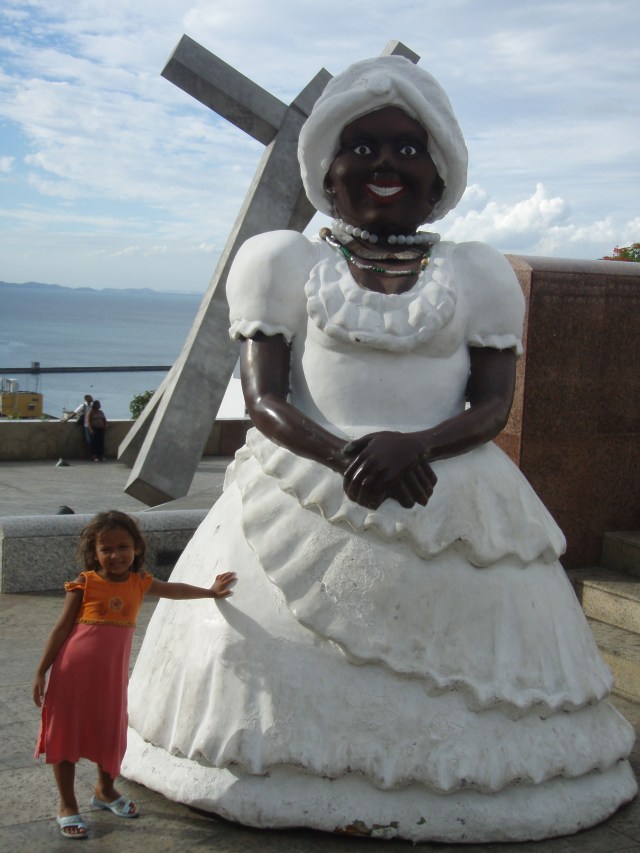
Wherever you go, there is music, young people practicing capoeira moves, black women wearing big white dresses, street vendors offering sugar cane juice or coco gelado (cold young coconut). And let’s not forget the smells of tropical fruits, dende oil (local palm), coconut cream…

In the Pelourinho, surrounded by 17th century churches

Overlooking the marina, from the upper city. The Elevator is on the left


Coconut drinks for sale at the beach

Praia Porto da Barra, the closest to the city

Onto the cooking. Both following recipes are adapted from Cook Brazilian by Letitia Moraines Schwartz. I found the book in Australia, a few years after our return on land and spending a long time trying to recreate brazilian dishes by memory.

Prawns with hearts of palm and tomatoes
Hearts of palm are widely used in Brazil and are easily found fresh all over the country. I used to keep some tinned on the boat and use them in salads, after rinsing them well. In Australia, they are available in specialised grocery stores. I cook the prawns in their shells as I like to munch on the crispy tails and slurp on the juice. But that’s me, so feel free to peel and devein them is you prefer.

Serves 4 as a main
Ingredients
400ml fish stock
12 large green (uncooked) prawns
3 tbsp grapeseed or olive oil
1 onion peeled and chopped
2 garlic cloves, peeled and crushed
125ml dry white wine
250g drained canned hearts of palm, cut into 2cm rounds
2 tomatoes, chopped
4 tbsp fresh coriander, chopped
- Place the fish stock in a small saucepan and keep hot at a low simmer
- Heat 1 tbsp of oil in a saucepan and add the onion. Cook on medium heat until soft, about 3 minutes. Add the crushed garlic and stir. Add the white wine, stir and reduce by half another 2 minutes.
- Add the fish stock and bring to the boil, cook for about 5 minutes until it starts to thicken. Season to taste, add the hearts of palm and tomatoes and cook until hot, about 2 minutes. Set aside. Garnish with the coriander just before serving.
- In a large frying pan, heat the remaining oil until smoking. Add the prawns and cook until they turn pink and opaque, about 1 minute on each side. Keep on heat for a few moments longer to crisp up the shells, trying not to overcook them.
- Place vegetables on a plate, prawns on top and serve with white rice. Enjoy!
Fish with Coconut Ginger sauce
In this recipe, the most time consuming task is the dicing of the capsicums, but you can slice them instead if you are in a hurry. I like to use flathead fillets, but any thin piece of fish is suitable. In Brazil, they crumb the fish with fuba, which is like fine polenta. I had left over arepa from the boat ( corn flour bought from Colombia, yes, more left over!) so I used that but really polenta will be just fine! The veggies and the sauce can be prepared ahead of time so it is a very quick and easy dinner to put together.

Serves 4 as a main
Ingredients
3 tbsp grapeseed or olive oil
1 green capsicum chopped
1 red capsicum chopped
2 red onions, peeled and chopped
4 garlic cloves. peeled and crushed
1 tbsp fresh thyme
40g fresh ginger, peeled and grated
50ml dry white wine
350ml fish stock
225ml coconut milk
500g flathead fillets, skinned and boned (ask your fishmonger to do it for you)
100g polenta
3 tbsp grapeseed or olive oil
- Cook the vegetables: Heat 2 tbsp of oil in a large state pan over medium heat. Add the capsicums and one onion, cook, stirring often until soft, about 3 minutes. Add 2 of the crushed garlic cloves and cook for another minute. Season with salt and pepper, add the chopped thyme, take off the heat and keep warm.
- Make the sauce: place 1 tbsp oil and remaining onion in a medium saucepan and cook over medium heat, stirring often, until soft and translucent. Add the grated ginger and remaining crushed garlic, cook stirring for another 2 minutes. Pour in the white wine and reduce by 2/3.
- Add the coconut milk, stir well and cook over a low heat until the sauce reaches a thin paste consistency. Strain the sauce thru a sieve into a gravy boat and discard the solids.Season to taste and keep warm.
- Cook the fish: pat dry the fillets with paper towels. Place the polenta, salt and pepper in a ziplock bag, add the fish fillets, close the bag and shake it until the fillets are well dredged. Remove from the bag shaking off the excess polenta.
In a large frying pan, heat the oil over medium heat. Gently lay the fish in the pan, it should sizzle lightly. Cook until golden on both sides, about 2 minutes per sides. Transfer to a warm platter with a fish slice. - Serve topped with the warm capsicums, spoon the sauce all round and serve with white rice.

Last Sunday morning, I found a note on the kitchen bench. “Mum we are out of Weet-bix”. For the uninitiated, Weet-bix is a breakfast cereal biscuit made of wheat and not much else beside a little bit of sugar. My kids (as do a lot of Aussie kids) love it and have grown up on the stuff. Personally I don’t understand how they like it so much, as I think it tastes like cardboard and only find it palatable when bathed in yogurt and a good dose of honey. It is an acquired taste, very much like vegemite and I can only explain the attraction by the fact that it has been one of the first solid food they were given as babies. They did take a liking to French baguettes and croissants when introduced to them as toddlers, but by then, their habits were set and I must admit that in the morning it’s far more convenient to grab the bottle of milk and a handful of Weet-bix than defrost a baguette (if we’re lucky enough to have some on hand!)
So how do we do our Weet-bix? Marc will have at least 5 with cold milk. Terry will top 2 or 3 with sliced bananas or sultanas and milk, while Anne prefers hers with yoghurt and maple syrup. I only ever ate them regularly when I was pregnant with Marc 18 years ago, and had this craving for Weet-bix, sliced kiwi fruits and greek yoghurt. Never been able to go back to it since, at least not as a breakfast cereal.
This doesn’t mean I don’t find a use for Weet-bix. The crumbs are what I am after and I wait patiently for the box to reach near emptiness to collect the crushed up biscuits and incorporate into my cooking. The family thinks I am nuts for keeping a container of broken Weet-bix, “throw it out” they say. But they also know that I hate waste and somehow will always try to make use of unwanted produce ( though I assure you I do throw bad food away!). When baking, I will partially substitute crushed wheat for flour in crumbles, muffins and cakes. It adds texture and crunch to savoury recipes like stuffing, meatballs or gratins. My kids also like how it makes their smoothies thicker.
So, back to last Sunday, faced with an entire bowl of crushed Weet-bix taking up valuable space in the pantry I decided to bake muffins. My go to recipe is Banana Muffins but since we also had ran out of bananas ( that’s what having teenagers in the house does to your supplies!) I directed my attention to a can of peaches, one of the many remnants from the boat which are very quickly approaching their Best Before Date. A quick search on the Weet-bix website yielded a super easy recipe which I adapted slightly to suit the ingredients on hand. The result was surprisingly good: quite moist, not overly sweet, a delightful whiff of cinnamon…it certainly tasted very nice freshly out of the oven. While the kids wolved a couple of them down plain, I found I enjoyed mine better topped with cream cheese and maple syrup icing. Nice treat with a cup of coffee for me, easy breakfast on the go for the kids, perfect size for lunch boxes…my version of waste not want not.
** Weet-Bix can be found in France and the USA labelled as Weetabix. And I just found out that the Chinese are going nuts over it since it was prominently featured in a popular Chinese TV drama paying as much as $50 for a box that retails for $5 in my local supermarket! I wonder how they do their Weet-Bix in China…

Peach and Weet-Bix Muffins
Makes 12
Ingredients
1 432g can peaches in heavy syrup
8 Weet-Bix wheat biscuits, crushed ( 8 handfuls if you are using the leftover crumbs as I did!)
2 cups plain flour
1/2 cup brown sugar
3 tsp baking powder
1 tsp cinnamon
3/4 cup milk
2 eggs
1 tsp baking soda
50g butter, melted
- Preheat oven to 190C.
- Drain peaches, reserve the syrup and chop the peaches.
- Place the crushed Weet-Bix, flour, brown sugar, baking powder and cinnamon into a mixing bowl. Stir the ingredients and add the chopped peaches.
- Pour the milk and the reserved juice into another bowl. Add the eggs and the baking soda. Mix with a whisk.
- Pour the egg mix into the dry ingredients. Add the melted butter and mix together, being careful not to overmix or the muffins will be tough.
- Spoon the mixture into greased muffin tins (or silicone ones, no need to grease these!). Bake for about 20 minutes, until muffins are golden and a skewer inserted in comes out clean. Let cool for a few minutes before turning onto a wire rack.


July is French month at our place. Always has been. The main reason is Bastille Day on July 14, which we always celebrate whether we are away on the boat or back home on land. Festivities have taken may shapes over the years. When lucky enough to be in France (or French territories) we would partake in the local events: fireworks over the bay of Benodet in 2006, military parade in La Rochelle in 2011, Polynesian Show in Bora Bora in 2014. Any other years, it means a big feast and though we’re talking about a single event, it is the lead up and the aftermath that make the whole month of July a festival of French food. From the planning, produce sourcing and prepping prior, to the cleaning up and accomodating of left overs afterwards…our home feels like a little corner of France.This year was no different.

We always try to host a big family meal at least once a month, and as you may know by now, everyone in our clan not only likes to eat but cook as well. In a typical Aussie fashion, no guests like to come empty handed and generally the first question I am asked after sending an invite is “What can I bring?” For many years, I would play the perfect French hostess, replying “nothing at all, just the pleasure of your company”. And I meant it, as I took great pleasure in planning the meal, choosing the wines to match the menu and the flowers to dress the table. Admittedly it was easy since our boats have often been the largest in any anchorage, and on land our house is comfortable enough to accomodate a crowd. However, years of cruising and sharing potluck dinners in parks or on beaches, discovering other’s culinary prowess created a shift of mindset and I now find it much more fun when each participants comes along with his or her own creation. Be it a potato bake or a bottle of wine. Keep people engaged, as they say…


This month dinner theme being French, is think it fair to say the challenge was on. Our guests were Terry’s children (Craig, Mal, Shelley and Tania) and partners (Danielle and Kathy), grand-children (Harry, Hannah, Cooper and Jessie), and the boys mum, Rosalie, and her partner, Ian. Rosalie immediately offered to cook Coq au Vin and I suggested that the others take care of starters as I had a couple of desserts in mind. Just as well the invites went out 3 weeks ahead, it gave everyone plenty of time to do some research…myself included! The kids were over the moon when on Bastille Day itself, I decided to test a batch of crepes for dinner. While quite common in France, a crepe dinner is a treat in Australia. I served a savoury main of mushroom and bacon pancakes followed by lemon and sugar crepes for dessert, to the delight of Anne who reminded me “I” had missed pancake Day in February this year, so this was only a catch up !
2 days later, I drove to meet a girlfriend, Elaine, in North Sydney, who wanted to show me her neighbourhood farmer’s market. She had asked me to come early, as stalls often sell out by 8am. That meant I was on the road at 7am on a Saturday, not something I do often. Luckily the traffic was light and being school holidays, it turns out the Northside Produce Market, was only moderately busy. As Elaine took me thru her favourite stalls, I could not help being reminded of the open air fresh markets in France, with the artisan breadmakers, green grocers, fresh flowers, and cheese mongers!!! Oh, never mind the early drive, it was so worth it, especially when I found Steph’s Gourmet Food and its french saucisson and pates! We instantly broke into French and babbled away, taking all of poor Elaine’s patience to pry me away…for we had a lot to catch up with over coffee and my friend was on a schedule as tight as I was, hosting a lunch of her own the next day. The rest of the morning was spent discussing world issues, upcoming holidays, the menus of our respective Sunday lunches and the latest Pokemon Go craze taking over! We have very diverse topics of interest as you can see …


This brings us to our French inspired lunch. Being in charge of desserts, I chose to make a chocolate tart and an apple cake. The former, I knew would be a favourite with the children (young and old), the latter is an old family favourite and a rustic take on the traditional apple pound cake. Unlike other years, I found myself with enough time on my hands to get organised in advance, and with a lot of the prep done the day before, it was merely a matter of putting things together and let the oven do the work for 1 hour or so. Which allowed me to prepare a main of beef stew with carrots, to complement Rosalie’s coq au vin, as well as a big batch of garlic mashed potatoes to mop up the delicious juices from both courses. And because I had last minute concerns that the grandchildren may not fancy all these wine laden stews, I cooked some mac and cheese as a back up! All we needed now were our starters…

Apple cake and chocolate tart in the waiting. For the tart recipe please visit this blog

Clockwise from bottom left: Beef and carrot stew, garlic mashed potatoes and Rosalie’s coq au vin
Shelley and Tania brought some vol au vents, with a choice of 2 delicious fillings of curried prawns and chicken and leek. Craig produced an amazing plate of salmon tartare garnished with dill and green sisho (courtesy of Darling Mills Herbs, one of my market’s finds!), while Danielle put together the most wonderful beef carpaccio with parmesan and rocket. My starters’ contribution was a plate of snails in a burgundy sauce of garlic and parsley butter, served in tiny pastries instead of shells as the French do. Not that we needed another dish, but I had promised to cook snails! With such an abundance of food, Terry suggested that we should end lunch right there and then, but hey, who was in a hurry…the beauty of long lazy lunches is that nobody is rushing to go home and it was well into the evening before our guests departed. One could say that no dinner was necessary.

Vol au vents served piping hot. Photo bomb from the can of soft drink!

Craig’s salmon tartare

Danielle’s beef carpaccio with rocket and parmesan

Escargots in parsley and garlic butter sauce

Escargots (Snails) in garlic butter sauce
In France, you can purchase frozen pre-seasoned snails in the shell, ready to bake. Believe it or not, it used to be one of my kids favourite food, owing a lot to the garlic butter sauce which they used to mop with chunks of fresh bread. We used to always have a packet handy in the freezer, ready to pop in the oven for 15 minutes and voila! No such thing here in Sydney, so I have had to come up with my own way. You can buy canned snails as well as clean empty shells, but at $1 a shell I find it an expensive proposition. I substitute shortcrust mini-pastry cases instead, which is not only more economical but turns this starter into a perfect finger food (one bite and it’s gone!)
You can also use vol au vent cases, another ideal vehicle to soak up the butter.

Makes 30
Ingredients:
1 can of escargots (2 1/2 dozens)
30 pre-cooked mini pastry or vol au vent cases
For the butter:
100g butter at room temperature
1 tsp salt
1 pinch white pepper
1 tbsp finely chopped parsley
1 garlic clove crushed (or more to taste!)
1 small french shallot finely chopped
1 tsp brandy (optional)
- Preheat oven to 160 C.
- Prepare the butter sauce: blend together all the ingredients, cover and allow to sit for a few hours for flavours to develop.
- Drain the content of the can, and place each snail in a pastry case ( or shell if using). Cover with the butter mixture prepared as above. Bake in the oven until the butter sauce sizzles and the pastry cases are warm.
- Serve immediately.
Beef and carrot stew
A favourite in our family, this meat stew uses white wine and mustard, instead of the traditional red wine and mushroom combination. I also like to include lots of carrots and peas, to make it a one-pot dish (though some kids have been known to pick the vegetables out…) This dish is best to prepare the day before as the flavours improve if left overnight. All you need is to reheat slowly before dinner.

Serves 6, as a main
Ingredients:
Olive oil
1.2 kg chuck steak, cut in 5cm pieces
2 large onions, peeled and chopped
2 celery sticks, trimmed and chopped
750 ml dry white wine
1 tbsp dijon mustard
1 bouquet garni
Sprigs of thyme
4 carrots, peeled and sliced in coins
200g frozen peas
A handful of parsley for garnish
Salt and pepper
- Heat oil in a large pot or dutch oven on high heat. Brown the meat in batches, set aside.
- In the same pot, add 1 tbsp of olive oil. Reduce the heat to medium and sweat the onion and celery, until soft and translucent ( careful not to let it burn). Add the meat and its juices, the dijon mustard and stir until combined. Pour in the white wine and enough water to cover the meat. Add the bouquet garni, bring to a boil, cover, reduce the heat to the minimum and simmer for at least 2 hours or until meat is tender, checking occasionally that the liquid has not reduced too much.
At that stage you can turn off the heat and let the dish cool and rest in the fridge overnight. - The next day, about 1 hour before serving, reheat the mix, adding the carrots after 30 minutes or so. Once carrots are cooked thru, check for the sauce consistency: if too much liquid, take the lid off and let it reduce. If too dry, add hot water. Add the frozen peas in the last 5 minutes of cooking.
- When ready to serve, season to taste and sprinkle parsley over the top. Serve hot, with garlic mashed potatoes.
Garlic mashed potatoes
Do we need a recipe for this? Ok, let’s see:
Serves 6
Ingredients:
1 kg of potatoes, peeled and quartered
100g butter, softened
1/2 cup of lukewarm milk
4 cloves of garlic, crushed
Salt and pepper
- In a large pot, place the potatoes in enough cold water to cover them. Bring the water to a boil and simmer for 15 minutes or until potatoes are tender. Drain the water out.
- Add the butter, milk and garlic and mash the potatoes with a potato masher or a fork (NOT a blender or it will turn the potatoes into a gluey mess!)
- Serve immediately or keep warm on minimum heat until ready to serve.
Apple cake
This recipe is not mine, I first discovered it 25 years ago in a book written by French chef Gabriel Gate “Great cakes and Desserts”. It has been a favourite for years, more rustic than an Apple tart and more transportable than a pound cake, it is terrific served warm with a dollop of cream or as a treat in the kids lunch box.

Serves 8
Ingredients:
150g butter, softened
150g caster sugar
3 large eggs
150 self raising flour
1/4 cup sultanas, softened in hot water
2 large apples (the original recipe says Granny Smith, but I used Jazz)
A sprinkling of cinnamon
1 tbsp caster sugar for dusting
Apricot jam ( I used redcurrant jelly ) for glazing
- Line a 20cm round cake tin with parchment paper. Preheat oven to 200 C/400F
- In a food mixer, cream butter and sugar for a few minutes. Beat in eggs, one at a time and lastly fold in the self raising flour. Pour the mixture into the prepared tin, tapping it a little to distribute the mixture evenly (the batter is quite thick, similar to a muffin batter).
- Drain the sultanas and sprinkle them on top of the batter.
- Peel, halve and core the apples. Cut into 5 mm slices and arrange over the cake mixture in a circular pattern, with the slices overlapping.
- Sprinkle the top with cinnamon and the extra sugar. Bake in the pre-heated oven for about 1 hour or until a metal skewer inserted in the cake comes out clean. Remove from the oven and unfold onto a cake rack. Allow to cool.
- Just before serving, brush the top with warmed redcurrant jelly


Today is a blustery, cold and miserable day. Not that you would know sitting inside: the sun is out, the sky is cloudless and a beautiful shade of pale blue. Stick your nose out the door though, and the near freezing temperature will make you retreat back in no time. Yep, cold snap all right! Ok I will admit it may not be so miserable for some, in fact, I saw a young girl walking around the Cronulla main street wearing nothing but a summer dress and a pair of sandals. She was skipping though, I suspect if I did the same (or jogged!) I’d warm up too…
For now, I will blame my lethargic mood on a dreadful flu that I have not been able to shake out for 2 weeks and making me feel like every day is miserable. Which of course is not the case, with so many other horrible things happening in the world ( too much news watching, I know!!), one would argue that what I feel is merely slight discomfort. So how do I deal with discomfort? By cooking of course, and the more “comfortable” the food the better. So, let me see. We’ve tried, Swedish meat balls (inspired by a recent visit to Ikea, I decided to make my own),
![IMG_2189[1]](https://i0.wp.com/galleyvantingaround.com/wp-content/uploads/2016/07/img_21891.jpg?resize=640%2C853&ssl=1)
beetroot and sweet potato soup (I read somewhere it was good for you),
![IMG_2187[1]](https://i0.wp.com/galleyvantingaround.com/wp-content/uploads/2016/07/img_21871.jpg?resize=640%2C853&ssl=1)
seafood chowder ( to go with corn bread a girlfriend had brought along one night ),
![IMG_2152[1]](https://i0.wp.com/galleyvantingaround.com/wp-content/uploads/2016/07/img_21521.jpg?resize=640%2C853&ssl=1)
even a big steak (after Terry said I needed to up my iron intake)
![IMG_2143[1]](https://i0.wp.com/galleyvantingaround.com/wp-content/uploads/2016/07/img_21431.jpg?resize=640%2C853&ssl=1)
and the mother of all comfort food: mac and cheese!
![IMG_2159[1]](https://i0.wp.com/galleyvantingaround.com/wp-content/uploads/2016/07/img_21591.jpg?resize=640%2C480&ssl=1)
They say you need to feed a cold, well let me tell you, mine is so well fed it does not want to go away.
Today is Bastille Day, so tradition would dictate that I cook a French feast to celebrate. This will happen later this weekend. In the meantime, I have been sorting thru some old photos of our past sailing trips and came across memories not only of our stay in La Rochelle, France, 5 years ago but also in Benodet, France, 10 years ago. Back then, the focus was on the boat and preparing for our big cruises ahead, food blogging was not even something I thought of, so focused was I on sailing and homeschooling 2 young children on board…( I started documenting our adventure on our sailing blog around that time, with more details here ) Very few pictures of meals were shot back in these days, which makes the rare ones I find priceless. So when I re-discovered photos of a Bastille Day dinner from 2011 I knew I had to share them.
I remember that day so vividly. We were docked at in the Vieux Port of La Rochelle, only meters away from the public esplanade. That morning, we woke up early to the sound of motorbikes and heavy traffic setting up for the annual military parade. Amazingly our back deck was prime seating to watch the line-up of politicians and local dignitaries gendarmes, police officers and their dog companions ( a great hit with the kids!).


The rest of the day was spent pottering on the boat and as was our usual ritual, we joined the crowd of tourists in the evening looking for somewhere to enjoy a sundowner and possibly find a nice place for dinner. Being Bastille Day and peak summer season, the streets of La Rochelle were busy and most restaurants pumping, so spotting a free table on the footpath was a bit like sport.
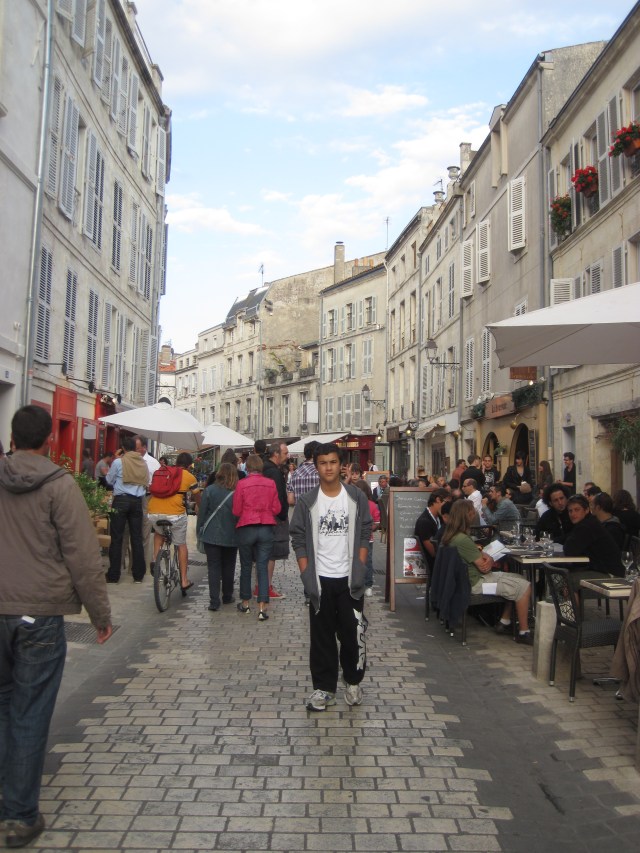
That’s when we ended up at Baitona, grabbed by the prospect of a “Hambur-Gers”. And we were not disappointed! To this day, I have not had anything like this: duck meat patty, topped with a thick slice of freshly seared foie gras, caramelised onions, a slice of sheep cheese, handful of rocket, in a bun and served with a generous amount of frites! That was Terry’s choice.

Marc went for a classic duck magret and frites (his favourite food in the whole world, still today!)

Anne opted for safe option of beef patty and chips (this is standard French kid’s meal, she was 8 years old back then )

while I picked pork steaks with braised capsicums ( I remember it was very tasty but in hindsight, a little boring considering the other dishes on offer!)

I am pretty sure we finished the night at the local ice cream joint watching the fireworks over the harbour, though I can’t find photos of that. But it is this kind of memories that sustain and inspire me on blue days…
Off the couch, into the kitchen and prepare a batch of pancakes. If we can’t have Hambur-Gers tonight, we will have crepes for dinner instead!


Recent Comments